Our media landscape is constantly changing, and in response publishers are finding new uses for their magazines.
(Presurfer)
Thursday, May 6, 2010


In your writing, don't be a popinjay
popinjay / pop-in-jey / noun
1. a person given to vain, pretentious displays and empty chatter; coxcomb; fop.2. British Dialect. a woodpecker, esp. the green woodpecker.3. Archaic. the figure of a parrot usually fixed on a pole and used as a target in archery and gun shooting.4. Archaic. a parrot.
A writer who appreciates the seriousness of writing so little that he is anxious to make people see he is formally educated, cultured or well-bred is merely a popinjay. -- Ernest Hemingway, Death in the Afternoon
History: 1270, "a parrot," from O.Fr. papegai (12c.), from Sp. papagayo, from Arabic babagha', from Pers. babgha "parrot," possibly imitative of its cry. Used of people in a complimentary sense (in allusion to beauty and rarity) from c.1310; meaning "vain, talkative person" is first recorded 1528. Obsolete fig. sense of "a target to shoot at" is explained by Cotgrave's 2nd sense definition: "also a woodden parrot (set up on the top of a steeple, high tree, or pole) whereat there is, in many parts of France, a generall shooting once euerie yeare; and an exemption, for all that yeare, from La Taille, obtained by him that strikes downe" all or part of the bird.
What's your forte?
forte / FORT / noun
There is some controversy over how to correctly pronounce "forte"; common choices in American English are "FOR-tay" and "for-TAY," but many usage commentators recommend rhyming it with "fort." None of these is technically true to the French, in which "forte" would sound more like "for." You can take your choice, knowing that someone somewhere will dislike whichever variant you choose. All, however, are standard.
something in which one excels : one's strong pointForte derives from the sport of fencing -- when English speakers borrowed the word from French in the mid-17th century, it referred to the strongest part of a sword blade, between the middle and the hilt. It is therefore unsurprising that "forte" eventually developed an extended metaphorical sense for a person's strong point. (Incidentally, "forte" has its counterpoint in the word "foible," meaning both the weakest part of a sword blade and a person's weak point.)
There is some controversy over how to correctly pronounce "forte"; common choices in American English are "FOR-tay" and "for-TAY," but many usage commentators recommend rhyming it with "fort." None of these is technically true to the French, in which "forte" would sound more like "for." You can take your choice, knowing that someone somewhere will dislike whichever variant you choose. All, however, are standard.
-- Merriam-Webster
Wednesday, April 28, 2010
Robert Southey: be brief
 "If you would be pungent, be brief; for it is with words as with sunbeams - the more they are condensed, the deeper they burn."
The benefit of business buzzwords
From Mark Jaffe at BNET:
"Business has to keep moving if it wants to look sharp, and often that’s accompanied by a fresh outbreak of buzzwords.
"Principle-centered leaders will go the extra mile, drilling down to the potential synergies between customer needs and brand touch points. While this strategy empowers a nimble few to ramp up, stay ahead of the curve and validate best practices within their networks, it also wrongsizes scalable mindshare due to the sheer volume of mission-critical heavy lifting. Not to mention the blocking and tackling. Correct me if I’m wrong — but at the end of the day, it’s like herding cats!
"Did you have difficulty following that? Good. Now let’s get back inside the box for a moment.
"Success in business is defined by growth and change. It’s not that complicated, really, yet the contribution of each era quickly defaults to the jargon it creates, the verbal illusion that we’re the ones who will finally cut the crap and revolutionize the economy. The old lexicon would serve admirably if, once in a while, someone had a new idea or two. If not, maybe bandaging old ideas with new words will suffice.
"Imagine you just wrapped up that expensive Harvard MBA and wangled an interview with the marketing department at General Mills. You tell them…what, exactly? That if they hire you, Cheerios will continue to be a top consumer brand? No, that won’t do it. You’re going to need Advanced Terminology.
" Try this: 'As we initiate pushback on the paradigm shift and gain traction – you know, actionable leverage — by examining gap analysis data on the more seamless core competencies at our centers of excellence, it’s possible to take this to the next level of penetration without having to circle back on predictable low-hanging fruit. In other words, we can bring value-add to the table and capture a win-win solution so long as we stay on the same page and keep everyone in the loop regarding margin factor learnings for deliverables. That’s our takeaway, net-net.'"
Tuesday, April 27, 2010
Maybe you should use the "sh"
shibboleth / SHIB-uh-luth / noun
For example: “Taxpayers beware: Don't buy into the shibboleth that more money automatically translates into better schools.” (Press Journal [Vero Beach, FL], July 27, 2003)1 : catchword, slogan2 : a widely held belief or truism3 : a custom or usage regarded as distinctive of a particular group
The Bible's Book of Judges (12:4-6) tells the story of the Ephraimites, who, after they were routed by the Gileadite army, tried to retreat by sneaking across a ford of the Jordan River that was held by their enemy. The Gileadites, wary of the ploy, asked every soldier who tried to cross if he was an Ephraimite. When the soldier said "no," he was asked to say "shibboleth"(which means "stream" in Hebrew). Gileadites pronounced the word "shibboleth," but Ephramites said "sibboleth." Anyone who left out the initial "sh" was killed on the spot. When English speakers first borrowed "shibboleth," they used it to mean "test phrase," but it has acquired additional meanings since that time.
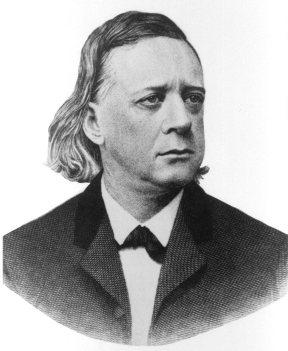
Henry Ward Beecher: reaching someone
Subscribe to:
Posts (Atom)