In 2006, the New York City Department of Education made a mistake in their bookkeeping. Apparently, there was a misspelling that had a word with one extra letter. This word was not readable by their accounting system and, somehow, that system decided to therefore spend twice as much on transportation. That year, $2.8 million was spent instead of the budgeted $1.4 million. The city had to come up with the money to replace it.
Thursday, May 20, 2010


Why we don't like some writers
The latest fad in university English departments is cognitive science. Lisa Zunshine, a professor of English at the University of Kentucky, is particularly interested in what cognitive scientists call the theory of mind, which involves one person’s ability to interpret another person’s mental state and to pinpoint the source of a particular piece of information in order to assess its validity.
Jane Austen’s novels are frequently constructed around mistaken interpretations. In “Emma” the eponymous heroine assumes Mr. Elton’s attentions signal a romantic interest in her friend Harriet, though he is actually intent on marrying Emma. She similarly misinterprets the behavior of Frank Churchill and Mr. Knightly, and misses the true objects of their affections.I'm going to slip into a Jane Austen page-turner right after my nap.
Humans can comfortably keep track of three different mental states at a time, Ms. Zunshine said. For example, the proposition “Peter said that Paul believed that Mary liked chocolate” is not too hard to follow. Add a fourth level, though, and it’s suddenly more difficult. And experiments have shown that at the fifth level understanding drops off by 60 percent, Ms. Zunshine said. Modernist authors like Virginia Woolf are especially challenging because she asks readers to keep up with six different mental states, or what the scholars call levels of intentionality.
The things people put on a resume
Not going to make the final cut:
"Pig wrestling champion."
Candidate who had worked in a supermarket listed as one of his responsibilities: "Cut the cheese."
A man included his picture and the declaration that he was single and lived with his mother.
Under 'reason for leaving' an applicant stated, "Threat of death."
"It seems that my credentials would be a good fit for what you are looking to accomplish, however, I don't wish to make a career of it."
"Ecxellent attention to detail."
Hobbies: "Sleeping, etc., etc."
"I didn't like working at the strip club because I felt exposed."
Words you can use to describe Washington, D.C.
malversation \mal-vur-SAY-shun\, noun:
Misconduct, corruption, or extortion in public office.languor \LANG-guhr; LANG-uhr\, noun:
1. Mental or physical weariness or fatigue.pablum \PAB-luhm\, noun:
2. Listless indolence, especially the indolence of one who is satiated by a life of luxury or pleasure.
3. A heaviness or oppressive stillness of the air.
1. Something (as writing or speech) that is trite, insipid, or simplistic.quixotic \kwik-SOT-ik\, adjective:
2. (capitalized) A trademark used for a bland soft cereal for infants.
1. Caught up in the romance of noble deeds and the pursuit of unreachable goals; foolishly impractical especially in the pursuit of ideals.
2. Capricious; impulsive; unpredictable.
Going Globish
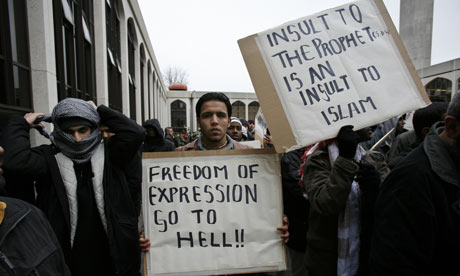
"In September 2005, Jyllands Posten (the Jutland Post), a culturally influential Danish newspaper, published a sequence of satirical cartoons poking fun at the prophet Muhammad, which provoked riots in which 139 people died. Possibly the most bizarre response to the affair, which surfaced again in January 2010 with an assault on the home of the artist, Kurt Westergaard, was a protest by Muslim fundamentalists outside the Danish embassy in London. Chanting in English, the protesters carried placards with slogans such as "Vikings Beware!", "Butcher Those Who Mock Islam", "Freedom of Expression Go to Hell" and (my favourite) "Down with Free Speech".
"This collision of the Koran with Monty Python, or perhaps of the OED with the Islamic Jihad, was the moment at which I began to reflect on the dramatic shift in global self-expression (I didn't have a word for it then) that was now asserting itself in this crisis, through a world united by the internet. What more surreal – and telling – commentary on the anglicisation of the modern world could there be than a demonstration by devout Muslims, in London, exploiting an old English freedom, and expressing it in the English language, to demand the curbing of the libertarian tradition that actually legitimised their protest?"
The karma thing
karma / kah(r)-mê / noun
You might try the adjective, karmic, though the mixing of a Sanskrit root with a Latin suffix is a little strange. Karma, of course, is not directly related to 'carma', our reward in this life for polite driving. Good 'carma' is built up by allowing other drivers into long traffic lines, giving up contested parking spaces, and the like. It results in finding more and better parking places, dodging road rage, and finding stations with lower gasoline prices.
Remember, your karma does not speak to your success in this life, but to your reincarnated form. In the English-speaking world, however, the word indicates the feel and invisible aura of something: "The karma in their house always sours when they bring out the slide shows."
History: Karma is the Sanskrit word for "deed" from the verb karoti "performs, does, acts", that is to say, an action that has consequences. Sanskrit is an Indo-European language related to English and most of the languages of Europe. So, it shouldn't be surprising to discover that this word is related to Latin creare "to create". In Russian we find chary "magic" and charovat' "to charm, enchant."
1. [Hinduism & Buddhism] The effects of our actions that determine our destiny in our next incarnation. 2. Vibes, aura, a distinct sense of or feeling for a place, person, or object.We sit at the knee of Dr. Goodword:
3. Fate, destiny.
You might try the adjective, karmic, though the mixing of a Sanskrit root with a Latin suffix is a little strange. Karma, of course, is not directly related to 'carma', our reward in this life for polite driving. Good 'carma' is built up by allowing other drivers into long traffic lines, giving up contested parking spaces, and the like. It results in finding more and better parking places, dodging road rage, and finding stations with lower gasoline prices.
Remember, your karma does not speak to your success in this life, but to your reincarnated form. In the English-speaking world, however, the word indicates the feel and invisible aura of something: "The karma in their house always sours when they bring out the slide shows."
History: Karma is the Sanskrit word for "deed" from the verb karoti "performs, does, acts", that is to say, an action that has consequences. Sanskrit is an Indo-European language related to English and most of the languages of Europe. So, it shouldn't be surprising to discover that this word is related to Latin creare "to create". In Russian we find chary "magic" and charovat' "to charm, enchant."
Thursday, May 6, 2010
What you can call your friends
puerile / PYUR-ul / adjective
1 : juvenile
2 : childish, silly
"Puerile" may call to mind qualities of youth and immaturity, but the term itself is no spring chicken. On the contrary, it's been around for more than three centuries, and its predecessors in French and Latin, the adjectives "puéril" and "puerilis," respectively, are far older. Those two terms have the same basic meaning as the English word "puerile," and they both trace to the Latin noun "puer," meaning "boy" or "child." Nowadays, "puerile" can describe the acts or utterances of an actual child, but it more often refers (usually with marked disapproval) to occurrences of childishness where adult maturity would be expected or preferred.
reprobate / REP-ruh-bayt / noun
1 : a person foreordained to damnation2 : a depraved person : scoundrel
These days, calling someone a "reprobate" is hardly a condemnation to hellfire and brimstone, but the original reprobates of the 16th century were hardened sinners who had fallen from God's grace. By the 19th century, "reprobate" had acquired the milder, but still utterly condemnatory, sense of "a depraved person." Gradually, though, the criticism implied by "reprobate" became touched with tolerance and even a bit of humor. It is now most likely to be used as it was in this August 1995 New Yorker magazine article about the death of musician Jerry Garcia: "It was suddenly obvious that Garcia had become, against all odds, an American icon: by Thursday morning, the avuncular old reprobate had smuggled his way onto the front pages of newspapers around the world."
inane / ih-NAYN / noun
: void or empty spaceThe adjective "inane" is now most commonly encountered as a synonym of "shallow" or "silly." But when this word first entered the English language in the early 17th century, it was used to mean "empty" or "insubstantial." It was this older sense that gave rise, in the latter half of the 17th century, to the noun "inane," which often serves as a poetic reference to the void of space ("the illimitable inane," "the limitless inane," "the incomprehensible inane"). This noun usage has not always been viewed in a favorable light. Samuel Johnson, in his Dictionary of the English Language (1755), says of "inane" that "it is used licentiously for a substantive," which in current English means that it is used as a noun without regard to the rules.
Subscribe to:
Posts (Atom)