
Monday, July 21, 2014
Hart Crane: words


Tuesday, July 15, 2014
The CIA's rules for writing

All writers using the guide, it says, "are assumed already to possess the three essentials of intelligence analysis: knowledge, clarity of thought, and good judgment. No writing, however skilled, can conceal deficiencies in these requisites.”
See if these rules are helpful for you:
- Keep the language crisp and pungent; prefer the forthright to the pompous and ornate.
- Do not stray from the subject; omit the extraneous, no matter how brilliant it may seem or even be.
- Favor the active voice and shun streams of polysyllables and prepositional phrases.
- Be frugal in the use of adjectives and adverbs; let nouns and verbs show their own power.
- Be objective; write as a reporter or analyst or administrator unless you are entitled to write as a policymaker.
For the most part, Directorate of Intelligence analysts are writing for generalists. Generalists may have deep expertise in specific areas, such as missile technology or a country’s tribal politics; nonetheless, the analyst’s goal is to do away with the specialist’s jargon and to put everything into layman’s language. If your audience consists of just a few people who thoroughly understand the subject (or who cannot be trusted to follow the reasoning without jargon to guide them), by all means sprinkle your piece with technical terms. Most of the time, however, write for the nonexpert.I'm glad this secret leaked.
Monday, July 7, 2014
Zadie Smith's rules for writing

Here are her rules for writing:
- When still a child, make sure you read a lot of books. Spend more time doing this than anything else.
- When an adult, try to read your own work as a stranger would read it, or even better, as an enemy would.
- Don’t romanticise your ‘vocation’. You can either write good sentences or you can’t. There is no ‘writer’s lifestyle’. All that matters is what you leave on the page.
- Avoid your weaknesses. But do this without telling yourself that the things you can’t do aren’t worth doing. Don’t mask self-doubt with contempt.
- Leave a decent space of time between writing something and editing it.
- Avoid cliques, gangs, groups. The presence of a crowd won’t make your writing any better than it is.
- Work on a computer that is disconnected from the internet.
- Protect the time and space in which you write. Keep everybody away from it, even the people who are most important to you.
- Don’t confuse honours with achievement.
- Tell the truth through whichever veil comes to hand — but tell it. Resign yourself to the lifelong sadness that comes from never being satisfied.
I particularly like the practicality of 1, 2, and 5. These are sturdy rules you learn either from experience or from an accomplished writer like Smith.
Monday, June 23, 2014
Very important: how to not use "very"
"Substitute ‘damn’ every time you’re inclined to write ‘very;’ your editor will delete it and the writing will be just as it should be." ~ Mark Twain
It seems this word very once meant truthful. That was back in the 13th Century, when people didn't have anything better to do than use words correctly.
If you think of verily and verify, you get the original idea.
Somewhere along the line, it came to mean grievous or extreme. Somebody should be held to account for this switcheroo.
Is there is a life after very? Why, yes. We're just too lazy to discover it.
Amanda Patterson offers a helpful chart for those who wish to banish this most useless of words. Print this out and tape it to your computer.
We need no proof that good usage has practical value, but hear the words of author Nancy H. Kleinbaum: "So avoid using the word very because it’s lazy. A man is not very tired, he is exhausted. Don’t use very sad, use morose. Language was invented for one reason, boys -- to woo women -- and, in that endeavor, laziness will not do."
Thursday, June 19, 2014
Going with the flow
“May what I do flow from me like a river,
no forcing and no holding back,
the way it is with children.”
~ Rainer Maria Rilke

The concept of flow is quite real, but it has a specific meaning. It's not some blast of inspiration from above. Wait for that to write and you'll slip from this life at your keyboard, covered in cobwebs.
The chap who came up with this concept is a Hungarian psychologist with an impossible name -- Mihaly Csikszentmihalyi (pronounced Cheek-sent-muh-hy-ee). Here's how he sees it:
According to Csikszentmihalyi, flow is completely focused motivation. It is a single-minded immersion and represents perhaps the ultimate experience in harnessing the emotions in the service of performing and learning. In flow, the emotions are not just contained and channeled, but positive, energized, and aligned with the task at hand. The hallmark of flow is a feeling of spontaneous joy, even rapture, while performing a task although flow is also described (below) as a deep focus on nothing but the activity – not even oneself or one's emotions.To achieve flow it is suggested that:
- One must be involved in an activity with a clear set of goals and progress. This adds direction and structure to the task.
- The task at hand must have clear and immediate feedback. This helps the person negotiate any changing demands and allows them to adjust their performance to maintain the flow state.
- One must have a good balance between the perceived challenges of the task at hand and their own perceived skills. One must have confidence in one's ability to complete the task at hand.
Perhaps the two most important ingredients for flow are motivation and ability in the person. If you can’t paint worth a lick, no amount of motivation will let you abandon conscious effort, because you just aren’t good enough. Conversely, a world-class author won’t produce anything of value if she has no desire to even sit at the computer, let alone write. The more you have of both, the easier reaching flow becomes.The lesson, then, is to discover where what you love doing overlaps what you are capable of doing well.
More insight for writers comes from Romanian journalist Simina Mistreanu, who interviewed seven award-winning journalists and came up with this insights:
Reporting and being part of other people’s lives triggers flow. These journalists find purpose in shedding light onto difficult, often heart-wrenching issues. That connection — between mission and joy — was echoed by the seven accomplished writers who use longform narratives to cover sensitive social issues.
I don't know that Csikszentmihalyi explicitly included a sense of mission as necessary for flow. It makes sense, however, in that how a writer views his work informs his passion and motivation. In other words, his writing has meaning.
In the end, the only way to find your zone is to sit down and start writing. "I write when I'm inspired," Peter De Vries said, "and see to it that I'm inspired at nine o'clock every morning."
Monday, February 4, 2013
Keep your subject and verb close
 |
| Together forever. |
Bad Good writers, no matter how much they like to interrupt themselves with a verbal diversion, imagine a magnet between subject and verb.
Good Good writers imagine a magnet between subject and verb, no matter how much they like to interrupt themselves with a verbal diversion.
Here's another example, this one from, ironically, the federal government.
The natural word order of an English sentence is subject-verb-object. This is how you first learned to write sentences, and it's still the best. When you put modifiers, phrases, or clauses between two or all three of these essential parts, you make it harder for the user to understand you.
Consider this long, convoluted sentence:
If any member of the board retires, the company, at the discretion of the board, and after notice from the chairman of the board to all the members of the board at least 30 days before executing this option, may buy, and the retiring member must sell, the member's interest in the company.
In essence, the sentence says: The company may buy a retiring member's interest. All the rest of the material modifies the basic idea, and should be moved to another sentence or at least to the end of the sentence.Remember boys and girls, Big Brother is watching you write.
Tuesday, January 8, 2013
Please don't say this
 |
| I'm begging you. |
For the past 38 years Lake Superior State University has compiled a list of words and expressions that should be banished from the English language.
This year, the expression Americans would most like banished is, predictably, "the fiscal cliff." Other top submissions of words and expressions needing banishment:
Kick the can down the road: A child's game has turned into the way legislators express their inability to do their jobs. Rassmussen reports that just 5 percent of Americans think Congress is doing an excellent job. Perhaps it's time voters kicked these do-nothings to the curb.
Double-down: Oh stop it.
YOLO: This expression, which stands for "you only live once," is used by every knucklehead in the country to explain why they narrowly missed being on this year's listing of Darwin award winners. At least the expression "it seemed like a good idea at the time" intimates you won't be doing a similarly stupid action again soon. In this case, the YOLO set appear unrepentant and unwilling to learn.
Spoiler alert: Expression used to ridicule the one member of the YOLO set who has the functioning brain cells to say: "Uh, not a good idea...."
Bucket List: Five-year-old movie about the things two cancer patients wanted to do before they died. See YOLO and get over it already.
Trending: Trend, turned into a verb, is ever so much more annoying than when "Googling," which was a made-up name, became a verb. Hopefully, like pet rocks, this fad of talking up what's trending will fade.
Superfood: This refers to anything that hasn't been triple-processed; hydrogenated; dried; or placed into a plastic wrapper that will keep it fresh for 25 years. People used to call this food.
Guru: Unless you're in an ashram, you are probably referring to an expert.
Monday, January 7, 2013
So is the book dead or not?
 |
| The old library. Good enough for me. |
In my small town, the corner on Main Street where the library sits is wrapped in fabric fencing, shielding from view a major construction project to expand the building.
I suppose it's going to resemble the library in Darien, Connecticut, not too many miles away, which is an impressive, sprawling structure.
As I drove by the construction my taxes are funding I wondered: Why are they doing this if the paper book is dead? Are libraries, like any good bureaucracy, reinventing themselves to stay alive?
They're certainly trying. The State of Connecticut is pouring millions into library renovations.
Two articles in The Wall Street Journal get at this matter from two different angles.
Peter Mandel, a children's book author, has noticed how his library has morphed into something digital.
Remember library books? Prior to the iPad and Kindle, readers used to pore over these paper and cardboard rectangles, possibly savoring their musty smell, their cover art and typefaces.
But take a peek around your local library. You'll see oceans of DVDs, CDs, copy machines and computer terminals, with customers queued up to take their turn with all this shared technology. Somewhere in the background—or more than likely exiled to the basement—are the stacks for book-browsing that we used to know.Nicholas Carr, on the other hand, tells us paper book lovers not to worry.
Half a decade into the e-book revolution, though, the prognosis for traditional books is suddenly looking brighter. Hardcover books are displaying surprising resiliency. The growth in e-book sales is slowing markedly. And purchases of e-readers are actually shrinking, as consumers opt instead for multipurpose tablets. It may be that e-books, rather than replacing printed books, will ultimately serve a role more like that of audio books—a complement to traditional reading, not a substitute.Everything old is new again. So will DVDs or books fill my new library?
How attached are Americans to old-fashioned books? Just look at the results of a Pew Research Center survey released last month. The report showed that the percentage of adults who have read an e-book rose modestly over the past year, from 16% to 23%. But it also revealed that fully 89% of regular book readers said that they had read at least one printed book during the preceding 12 months. Only 30% reported reading even a single e-book in the past year.
Monday, December 24, 2012
Wi yew kant spel gud
I have a spelling checker,
It came with my PC.
It plane lee marks four my revue
Miss steaks aye can knot sea.
 |
| We iz tryin hart. |
It is not just that we have “for” and “four”, “stake”, “steak” and “mistake”. We also have “peak”, “peek” and “pique”. “Horrid” has a double consonant in the middle, “timid” a single one. “Prefer” has one “f”, “proffer” two.Misspelling is not a modern malady, Skapinker writes.
In Spell it Out, David Crystal reproduces a 1910 cartoon from Punch magazine in which a boss berates his secretary for typing “income” as “incum”. “Good Heavens!” exclaims the secretary. “How did I come to leave out the ‘b’?” And in 1750 Lord Chesterfield, the statesman, advising his son to brush up on his spelling, warned: “I know a man of quality, who never recovered the ridicule of having spelled ‘wholesome’ without the ‘w’.”Why is English spelling such a tangle?
It all started when Latin-speaking missionaries arrived in Britain in the 6th century without enough letters in their alphabet. They had 23. (They didn’t have “j”, “u” or “w”.) Yet the Germanic Anglo-Saxon languages had at least 37 phonemes, or distinctive sounds. The Romans didn’t have a letter, for example, for the Anglo-Saxon sound we spell “th”. The problem continues. Most English-speakers today have, depending on their accents, 40 phonemes, which we have to render using 26 letters. So, we use stratagems such as doubling vowels to elongate them, as in “feet” and “fool”.
With the Norman invasion in 1066, spelling became more complicated still; French and Latin words rushed into the language. As the centuries went by, scribes found ways of reflecting the sounds people used with the letters that they had. They lengthened vowels by adding a final “e”, so that we could tell “hope” from “hop”.Read more of this sad, sad history here.
Wednesday, December 5, 2012
Are you a creative, innovative professional?
Save me.
Linked In has rummaged through your resume and made a Top Ten list of buzzwords.
1. CreativeA year ago LinkedIn put together the same sort of list of overused buzzwords. It’s no surprise that eight of the ten terms are the same this year, and “creative” remains at the top of the list. Two terms that are no longer on the list: “communication skills” and “dynamic. But those were replaced by the equally trite “responsible” and “analytical.”
2. Organizational
3. Effective
4. Motivated
5. Extensive expertise
6. Track Record
7. Innovative
8. Responsible
9. Analytical
10. Problem solving
Here's a look at buzzword use by geography.

The word that makes me the most crazy is "professional," as in "unemployed, do as little as possible professional."
Wednesday, October 10, 2012
A formula for success

"Let me say for a start that I don’t think it is a very good idea to write different sorts of things. If I were to give serious practical advice to a young writer about how to succeed I would say, Write the same book, or the same play, over and over again, just very slightly different, so that people get used to it. It takes some time, but if you do it often enough, finally people will get the hang of it, and get familiar with it, and they’ll like it.
"Then you go on producing a consistent product and you’ll have a market for it. Because the consumer of books or plays, including myself, very reasonably wants to know or have some idea in advance what the book or the play is going to be like. It is the same as buying breakfast cereal: if you buy a packet of cornflakes, you want to be sure it will contain cornflakes and not muesli. It is very irritating if the packet doesn’t contain what you expected it to contain. Similarly it is a reasonable demand from the theatergoer or novel reader that he should get a constant product, which is identified by the author’s brand name.
"If I could have done this, I would have. But I don’t have much control over what I produce. All I can do is to write the stories that come to me. And what a story is, is in part the way of telling it. A story is not an event in the outside world—it consists in the telling. It is only when you think that you have found a way of telling the story that you can start writing it. Different stories naturally suggest different ways of telling them. If I had been better organized as a writer, I would have gone beyond the stories’ dictates and imposed my own central imprint on everything.
"If I could have done this, I would have. But I don’t have much control over what I produce. All I can do is to write the stories that come to me. And what a story is, is in part the way of telling it. A story is not an event in the outside world—it consists in the telling. It is only when you think that you have found a way of telling the story that you can start writing it. Different stories naturally suggest different ways of telling them. If I had been better organized as a writer, I would have gone beyond the stories’ dictates and imposed my own central imprint on everything.
Friday, September 28, 2012
Do your sentences make sense?

Verlyn Klinkenborg, a member of The New York Times Editorial Board, notes that often a writer speaks the language, knows the vocabulary, and tries to honor the rules of grammar and syntax.
Yet he regularly produces sentences of whose literal meaning he’s completely unaware. In its own way, this is fantastic, like setting out to knit a cardigan, producing an armoire, and wondering why it’s so loose in the shoulders.
Here’s an example, written by a student several years ago: “I also had my father’s thick fingers, fingers that I often hid underneath thighs.” You see the problem of course. The author apparently hides his (or her) fingers under anyone’s thighs, not just his (or her) own. This is what the sentence actually says, though not what the writer is hoping it says.Readers help a bad writer along, Klinkenborg says.
Readers also fail to catch such mistakes because they’re good at guessing what the writer really means. It’s not that they’re under-reading — skipping past the problem in a sentence. They’re nearly always over-reading, alive to the writer’s intention, as if the writer were somehow immanent in the sentence, looking over the reader’s shoulder, expecting the benefit of the doubt. We do this all the time in conversation. And so the sentence ceases to be a sentence — a verbal construct of a certain length, velocity and rhythm with, at bottom, an unambiguous literal meaning. It becomes a sign instead that telepathic communication is about to commence.What to do?
You’ll need to write, and revise, as if your intentions were invisible and your sentences will be doing all the talking, all on their own. This may be the hardest thing a writer has to learn. Looking at a sentence you’ve made is like looking at yourself in the shard of a mirror. A part of you has to be dreadfully literal-minded (and impervious to self-flattery) in order to do the work of making good, clear sentences. Seeing what your sentences actually say is never easy, but it gets easier with practice. There’s even a certain pleasure in discovering the booby traps you’ve laid for yourself in your prose.
"Inexperienced writers," Klinkenborg concludes, "tend to trust that sentences will generally turn out all right — or all right enough. Experienced writers know that every good sentence is retrieved by will from the forces of chaos."
Friday, September 21, 2012
A quick primer on serial commas
 Bill Walsh at the invaluable Blogslot offers guidance on the serial comma:
Newspaper style generally eschews the serial comma. I'm fine with that. Toast, juice, milk and Trix. But sometimes that comma is useful. If I write about a city's departments of housing, parks and recreation and well-being, do I mean there's a department of parks and recreation or a department of recreation and well-being? And what if my series consists of three or four full sentences? For many serial-comma-phobic journalists, the answer to those questions tends to be: Semicolons! Ugly, unwieldy semicolons. Clearly, those journalists did not actually read the stylebook to which they are slavishly devoted. AP specifically says that the serial comma is needed in those cases.
IN A SERIES: Use commas to separate elements in a series, but do not put a comma before the conjunction in a simple series: The flag is red, white and blue. He would nominate Tom, Dick or Harry.
Put a comma before the concluding conjunction in a series, however, if an integral element of the series requires a conjunction: I had orange juice, toast, and ham and eggs for breakfast.
Use a comma also before the concluding conjunction in a complex series of phrases: The main points to consider are whether the athletes are skillful enough to compete, whether they have the stamina to endure the training, and whether they have the proper mental attitude.
So, Walsh writes, it's The departments of housing, parks and recreation, and well-being, notthe departments of housing; parks and recreation; and well-being. Once one of the elements in a series includes a comma, then you want those ugly, unwieldy semicolons: The committees on appropriations; health, education and welfare; and labor.
Thursday, September 20, 2012
Elmore Leonard's10 rules of writing

2. Avoid prologues: they can be annoying, especially a prologue following an introduction that comes after a foreword. But these are ordinarily found in non-fiction. A prologue in a novel is backstory, and you can drop it in anywhere you want. There is a prologue in John Steinbeck's Sweet Thursday, but it's OK because a character in the book makes the point of what my rules are all about. He says: "I like a lot of talk in a book and I don't like to have nobody tell me what the guy that's talking looks like. I want to figure out what he looks like from the way he talks."
3. Never use a verb other than "said" to carry dialogue. The line of dialogue belongs to the character; the verb is the writer sticking his nose in. But "said" is far less intrusive than "grumbled", "gasped", "cautioned", "lied". I once noticed Mary McCarthy ending a line of dialogue with "she asseverated" and had to stop reading and go to the dictionary.
4. Never use an adverb to modify the verb "said" ... he admonished gravely. To use an adverb this way (or almost any way) is a mortal sin. The writer is now exposing himself in earnest, using a word that distracts and can interrupt the rhythm of the exchange. I have a character in one of my books tell how she used to write historical romances "full of rape and adverbs".
5. Keep your exclamation points under control. You are allowed no more than two or three per 100,000 words of prose. If you have the knack of playing with exclaimers the way Tom Wolfe does, you can throw them in by the handful.
6. Never use the words "suddenly" or "all hell broke loose". This rule doesn't require an explanation. I have noticed that writers who use "suddenly" tend to exercise less control in the application of exclamation points.
7. Use regional dialect, patois, sparingly. Once you start spelling words in dialogue phonetically and loading the page with apostrophes, you won't be able to stop. Notice the way Annie Proulx captures the flavour of Wyoming voices in her book of short stories Close Range.
8. Avoid detailed descriptions of characters, which Steinbeck covered. In Ernest Hemingway's "Hills Like White Elephants", what do the "American and the girl with him" look like? "She had taken off her hat and put it on the table." That's the only reference to a physical description in the story.
9. Don't go into great detail describing places and things, unless you'reMargaret Atwood and can paint scenes with language. You don't want descriptions that bring the action, the flow of the story, to a standstill.
10. Try to leave out the part that readers tend to skip. Think of what you skip reading a novel: thick paragraphs of prose you can see have too many words in them.
My most important rule is one that sums up the 10: if it sounds like writing, I rewrite it.
Wednesday, September 19, 2012
George Orwell's rules for writing

- Never use a metaphor, simile, or other figure of speech which you are used to seeing in print.
- Never use a long word where a short one will do.
- If it is possible to cut a word out, always cut it out.
- Never use the passive where you can use the active.
- Never use a foreign phrase, a scientific word, or a jargon word if you can think of an everyday English equivalent.
- Break any of these rules sooner than say anything outright barbarous.
Tuesday, September 18, 2012
She might be cut out of cabbage
Today is the 303rd anniversary of the birth of that quintessential 18th-century curmudgeon Dr. Samuel Johnson, the literary lion of Georgian London for much of his lifetime (1709-1784). A poet, critic, lexicographer, and wit, Johnson compiled the first respectable English dictionary between 1747 and 1755, following several years of writing critical articles for London magazines such as The Idler.
He was the master of the insult:
I took to Poll very well at first, but she won't do upon closer examination... Poll is a stupid slut. I had some hopes for her at first, but when I talked to her tightly and closely, I could make nothing of her. She was wiggle waggle: and I could never persuade her to be categorical.
...she was as bad as negative badness could be, and stood in the way of what was good; that insipid beauty would not go a great way... and such a woman might be cut out of a cabbage, if there was a skilful artificer.
The fellow's an idiot; he is as awkward as a turn-spit when first put to the wheel, and as sleepy as a dormouse.
Why, Sir, Sherry is dull, naturally dull; but it must have taken him a great deal of pains to become what we now see him. Such an excess of stupidity, Sir, is not in nature.
Monday, September 17, 2012
What's the best word ever?
Blogger Ted McCagg has been hosting a "Best Word Ever contest." That there seemed to be no rules, no criteria and apparently no "contest" except for Mr McCagg's own choice is no matter.
 Darn. I kinda like kerfuffle myself.
As we all know, a diphthong, literally "two sounds" or "two tones", also known as a gliding vowel, refers to two adjacent vowel sounds occurring within the same syllable. Technically, a diphthong is a vowel with two different targets: that is, the tongue moves during the pronunciation of the vowel. In most dialects of English, the words eye, hay, boy, low, and cow contain diphthongs.
Brackets of competing words like like whirligig and scalawag and zydeco and angina have faced off in a gradually narrowing contest over the course of months. The entrants seemed to be chosen for the sheer fun of saying them.Now we have the winner ... dipthong.
As we all know, a diphthong, literally "two sounds" or "two tones", also known as a gliding vowel, refers to two adjacent vowel sounds occurring within the same syllable. Technically, a diphthong is a vowel with two different targets: that is, the tongue moves during the pronunciation of the vowel. In most dialects of English, the words eye, hay, boy, low, and cow contain diphthongs.
Friday, September 14, 2012
Somebody fact check this
"Stewardesses" is the longest word typed with only the left hand and "lollipop" with your right.
I have issues with that ... no problem!
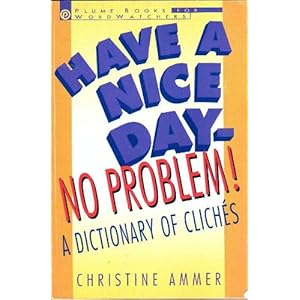
"Inspired by Lewis, I am for putting a 20-year moratorium on the use of the inflationary word icon to describe anything other than a small religious painting. Nothing to be done about it, I realize, but it is worth noting that the perhaps perfunctory phrase 'You are welcome' has now been replaced with 'No problem,' which does not seem a notable advance in elegance or manners. I'm for banishing the word workshop—which is also available as a verb—to describe what is little more than a classroom discussion of undergraduate poems or stories; 'workshop' used in this sense, Kingsley Amis once remarked, implies all that has gone wrong with the world since World War II.
"Allowing the word issue to stand in for problem—'I have issues with that—is as pure a case of verbicide as I know: a useful word, issue, distinctly different in meaning from problem, describing a matter still in the flux of controversy in a way that no other word does.Impact and focus deserve a long rest from overuse, and process is surely one of those words that never keeps its promise. Perhaps, too, the time has come to call a halt to people describing people as 'highly literate,' given that literate means no more than that one can read and write; what they really mean, presumably, when they say literate is 'literary' or possibly "cultivated," which is not at all near the same thing.
"Or consider the word disinterested, with its core meaning of impartiality or above personal interest, which has now all but melted into the condition of a pathetic synonym for uninterested. If we lose disinterested do we not also lose the grand ideal that it represents? I fear we may already have done so, at least insofar as I find it impossible at present to name a single disinterested figure on the stage of world politics. Ideas Have Consequences is the title of a once famous book, but words, being the substance out of which ideas are composed, turn out to have even greater consequences."
Thursday, September 13, 2012
An adjective! Yikes!

-- Mark Twain
"The adjective is the banana peel of the parts of speech."
-- Clifton Fadiman
"The adjective is the enemy of the noun."
-- Voltaire
"If the noun is good and the verb is strong, you almost never need an adjective."
-- J. Anthony Lukas
"Don’t say it was 'delightful'; make us say 'delightful' when we’ve read the description. You see, all those words (horrifying, wonderful, hideous, exquisite) are only like saying to your readers 'Please will you do my job for me?'"
-- C.S. Lewis
"Forward motion in any piece of writing is carried by verbs. Verbs are the action words of the language and the most important. Turn to any passage on any page of a successful novel and notice the high percentage of verbs. Beginning writers always use too many adjectives and adverbs and generally use too many dependent clauses. Count your words and words of verbal force (like that word “force” I just used)."
-- William Sloane
Subscribe to:
Posts (Atom)