Saturday, December 19, 2009

How Einstein wrote


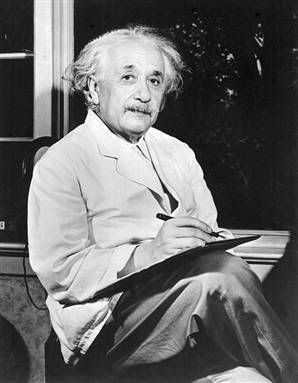
Professor John Stachel, a former director of the Einstein Papers Project, believes the secret to Einstein's writing style can be found in his comment to an interviewer: "I am the acoustic type. I learn by ear and give by word. Writing is difficult." But his letters flowed easily in a clear stream-of-consciousness - he wrote the way he would have spoken, without pretensions.

"I think he heard the words before he wrote them, and only when they sounded right did he commit them to paper," Stachel says. "Many poets operate this way, but I doubt many scientists do." He speculates that this pattern may have stemmed from Einstein's childhood habit of quietly saying words to himself before repeating them out loud, a kind of self-echolalia.

Two rules for writers

In his blog, War on Mediocrity, Colin Marshall, lists his favorite heuristics, i.e., "rules of thumb," educated guesses, intuitive judgments or simply common sense. A heuristic is a general way of solving a problem.

"Barf it out, then clean it up." A friend quoted her journalism teacher as saying this, and I've since adopted it as a pithy reflection of the broader phenomenon that the sole path to non-suckage winds through the treacherous woods of suckage. I must therefore make peace with producing something sucky and then iterate that initial product until it achieves decency. The trick is avoiding discouragement by that first piece of suckiness. As a writing principle, everyone knows this — you pound out the rough draft, then do the real writing, which is rewriting — but I submit that it's applicable across all pursuits. Pro: it's the only way to create good things, I suspect. Con: risks incentivizing producing crappier than I have to, at least to start. A worse initial effort might make fruitful iteration tougher. 
"Can I fail at this?" It's like Raymond Chandler said: there is no success without the possibility of failure. Therefore, something I can't fail at is also something I can't succeed at. I can fail at conducting an interview, writing an essay or making a video. I can't fail at meandering around the internet in search of "neat stuff to read." In a recent tweet, I defined procrastination "the temporary displacement of tasks at which it is possible to fail with tasks at which it is not possible to fail." I suspect I'm less far off the mark than ever, especially regarding why procrastination is not a productive tendency.

Friday, December 18, 2009

Don't you hate to hear this?

If you're in business it pays to pay attention to the words you use with your customers.

Writing in The New York Times, Stanley Fish notes:

There is a class of utterances that, when encountered, produces irritation, distress and, in some cases, the desire to kill. You hear or read one of these and your heart sinks. Everyone will have his or her (non)favorites. Mine is a three-word announcement on the TV screen, “To Be Continued,” which says, “I know that you have become invested in this story and are eager to find out how it ends, but you’re going to have to wait for a few days or a week or a month or forever.”

Here are others. What others do you hate?
  • Sold out.
  • Closed for Private Party
  • Back in an Hour
  • Not in Service
  • Use Other Door
  • Register Closed
  • This may hurt a little
  • Your call is important to us
  • I’m sorry, but I don’t recognize your response
  • May I put you on hold for a minute?
  • Your card has been denied
  • To return to the menu
  • Please listen carefully as our menu options have changed
  • Invalid user name
  • Assembly Required

Wednesday, December 16, 2009

Of a mind to write

"I write entirely to find out what I'm thinking, what I'm looking at, what I see and what it means. What I want and what I fear." -- Joan Didion

"One had the right to write because other people needed news of the inner world, and if they went too long without such news they would go mad with the chaos of their lives." -- Arthur Miller

“Writing and learning and thinking are the same process.” -- William Zinsser


"The pen is the tongue of the mind." -- Miguel de Cervantes

"Writing has nothing to do with communication between person and person, only with communication between different parts of a person's mind." -- Rebecca West

"It is not a bad idea to get in the habit of writing down one's thoughts. It saves one having to bother anyone else with them." -- Isabel Colegate

"How do I know what I think until I see what I say?" -- E. M. Forster

"The only time I know that something is true is the moment I discover it in the act of writing." -- Jean Malaquais

The $2 million comma

So you don't worry about punctuation? This from Professor Malcolm Gibson's Wonderful World of Editing


By GRANT ROBERTSON
From (Toronto) Globe and Mail, June 8, 2006

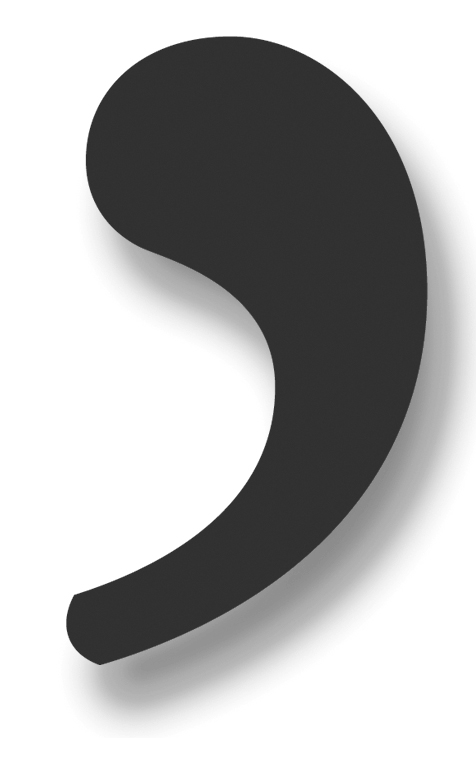
 A grammatical blunder may force Rogers Communications Inc. to pay an extra $2.13 million to use utility poles in the Maritimes after the placement of a comma in a contract permitted the deal's cancellation.

The controversial comma sent lawyers and telecommunications regulators scrambling for their English textbooks in a bitter 18-month dispute that serves as an expensive reminder of the importance of punctuation.

Rogers thought it had a five-year deal with Aliant Inc. to string Rogers' cable lines across thousands of utility poles in the Maritimes for an annual fee of $9.60 per pole. But early last year, Rogers was informed that the contract was being cancelled and the rates were going up.

Impossible, Rogers thought, since its contract was iron-clad until the spring of 2007 and could potentially be renewed for another five years.

Armed with the rules of grammar and punctuation, Aliant disagreed. The construction of a single sentence in the 14-page contract allowed the entire deal to be scrapped with only one-year's notice, the company argued.

Language buffs take note — Page 7 of the contract states: The agreement “shall continue in force for a period of five years from the date it is made, and thereafter for successive five year terms, unless and until terminated by one year prior notice in writing by either party.” 

Rogers' intent in 2002 was to lock into a long-term deal of at least five years. But when regulators with the Canadian Radio-television and Telecommunications Commission (CRTC) parsed the wording, they reached another conclusion.

The validity of the contract and the millions of dollars at stake all came down to one point — the second comma in the sentence.

Had it not been there, the right to cancel wouldn't have applied to the first five years of the contract and Rogers would be protected from the higher rates it now faces.

“Based on the rules of punctuation,” the comma in question “allows for the termination of the [contract] at any time, without cause, upon one-year's written notice,” the regulator said.
Tuesday, December 1, 2009

Every writer should take this word to heart

"If I'd had more time, I'd have written a shorter letter."
-- Mark Twain

concise / kên-sais / adjective

Tersely expressed, written or spoken with the smallest number of words.

Dr. Goodword notes:
If a text may be concise, of course, it may be written concisely (the adverb). Although we attribute conciseness to such texts, concision is a much lovelier word that expresses the same sentiment: a memo written with such concision that it was a pleasure to read.
History: Concise is the English revision of Latin concisus, the past participle of concidere "to cut up", comprising com- "(together) with", used here as an intensive prefix + -cidere, a combining form of caedere "to hit, chop, strike down". We find this root in many words borrowed from Latin that imply cutting, incisor, the cutting tooth, incision, and decision, the act that cuts off debate. Since cutting and hitting were the primary means of slaying people prior to the invention of the gun, this word also came to mean "to kill". The same root produced a noun combining form, -cidium "killing", which underlies English words like homicide, suicide, and genocide.
"Vigorous writing is concise. A sentence should contain no unnecessary words, a paragraph no unnecessary sentences, for the same reason that a drawing should have no unnecessary lines and a machine no unnecessary parts. This requires not that the writer make all his sentences short, or that he avoid all detail and treat his subjects only in outline, but that every word tell."

— William Strunk Jr.
in
Elements of Style

Friday, November 6, 2009

Yeah, right

There's a joke, beloved by language mavens, about a professor who is giving a lecture on grammar. "A double negative is a positive," he says, "but a double positive is never a negative."

Someone in the audience replies, "Yeah, right."